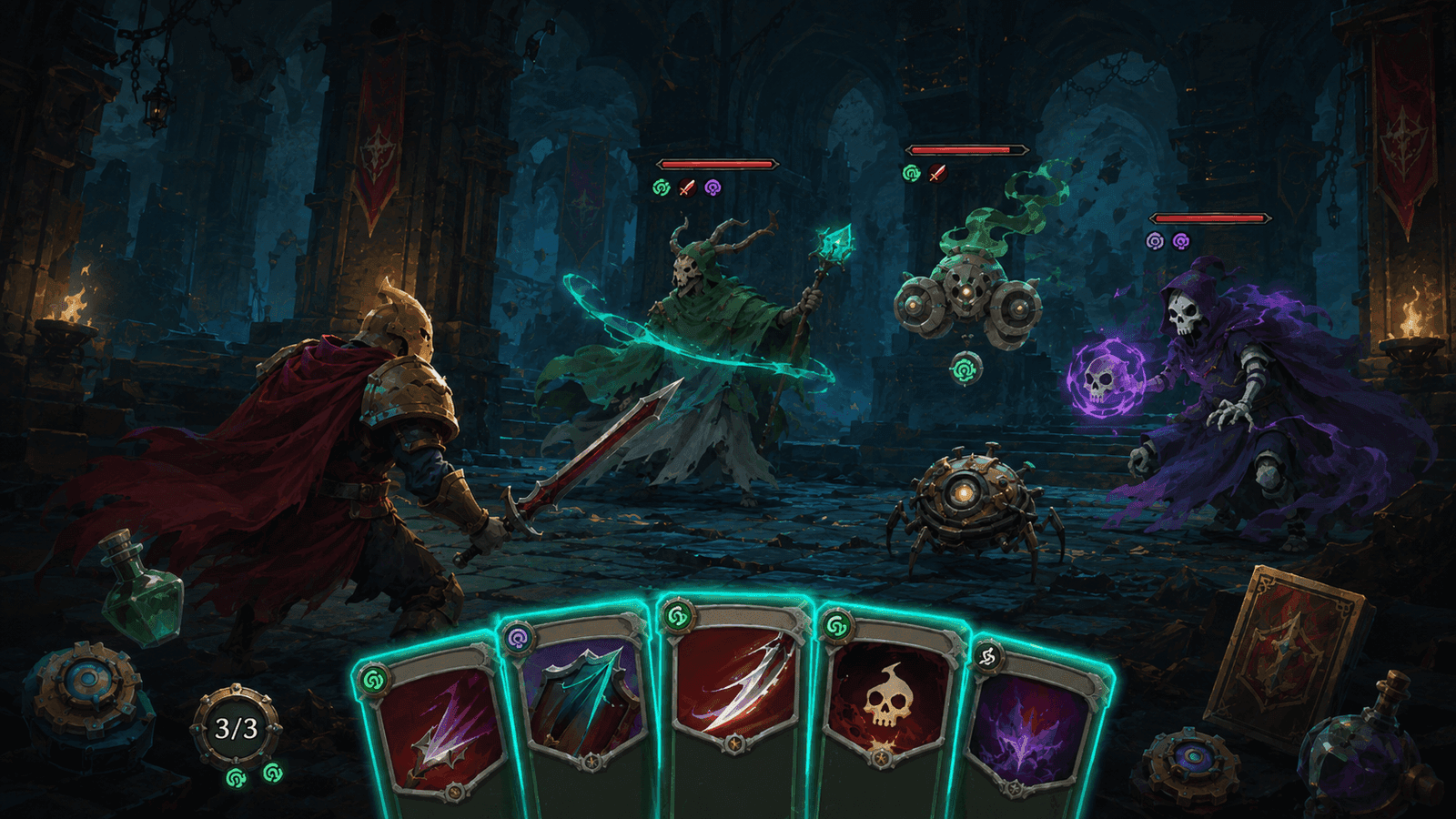
Beta-only content: The cards below were added to multiplayer on the v0.108.0 beta branch. They are not part of the current v0.107.1 main branch at the time of writing.
Sources: official v0.108.0 patch notes, official Steam news hub, and the high-traffic community patch thread.
The new v0.108 multiplayer cards are deliberately louder than ordinary single-player cards. A 12-cost Ironclad attack, a Power that lets one player copy another player's Powers, and a card that gets stronger before being passed across the table would look absurd in a solo pool. In co-op, that is the point: these cards reward teams for building around shared actions instead of playing four separate runs on the same screen.
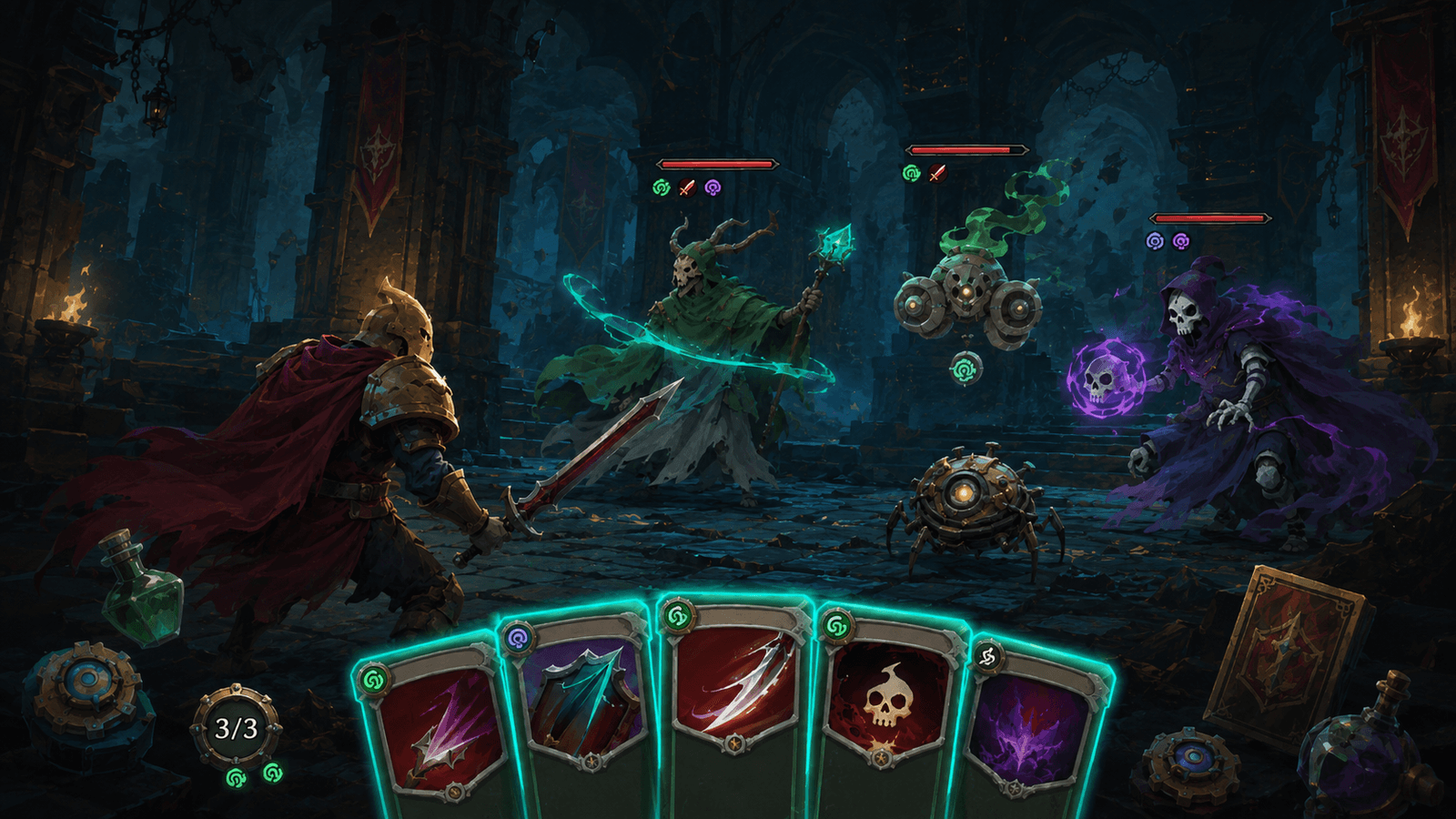
New card roster and team jobs
| Character | Card | Cost | Best team job |
|---|---|---|---|
| Ironclad | Midnight | 12 | Finisher after the whole team has Exhausted cards |
| Ironclad | Blaze | 2 | Transfer Strength to the player with the best multi-hit turn |
| Ironclad | Outrage | 0 | Seed every discard pile with a free attack |
| Silent | Blade Symphony | 1 | Give every player Shivs and enable card-play triggers |
| Silent | Concoct | 0 | Turn an ally's multi-hit attacks into Poison application |
| Silent | Fade | 0 | Give a teammate temporary Dexterity for a dangerous turn |
| Regent | Plot | 1 | Schedule extra draw for the entire team next turn |
| Regent | Constellation | 0 | Give one ally draw, energy, and Block immediately |
| Necrobinder | Underworld | 2 | Convert team attack damage into Doom for one turn |
| Necrobinder | Soulbound | 1 | Share Soul generation with a selected ally |
| Necrobinder | Cacophony | 2 | Cash in a team-wide draw count for burst damage |
| Defect | Hibernate | 2 | Turn Frost into team Block for the current turn |
| Defect | One For All | 1 | Add damage to every player's zero-cost Attacks |
| Defect | Imitation Learning | 1 | Copy an ally's next Powers |
| Colorless | The Ball | 1 | Scale damage, then pass the card to another player |
Midnight is a plan, not a miracle
Midnight costs 12 energy and deals 99 damage, or 120 upgraded. Its cost falls by one whenever anyone Exhausts a card that combat. The obvious partners are Ironclad Exhaust cards, Silent Shivs that can be consumed, and Necrobinder Souls. The less obvious requirement is timing: getting Midnight to zero after the fight is already won is not a build.
A team considering Midnight should answer three questions. How many Exhausts happen naturally before the important damage turn? Can the Ironclad draw or retain Midnight near that turn? Does the team still function if Midnight stays expensive? If the answer to the third question is no, the deck has become a combo hostage.
The card is most attractive in boss fights, where the team has time to accumulate Exhausts and the damage ceiling matters. In short hallway fights, it may be a dead draw. That tradeoff is healthy as long as the Ironclad continues drafting front-loaded damage instead of expecting teammates to solve every early turn.
Silent is the best enabler, not automatically the carry
Blade Symphony adds Shivs to every player's hand. That can discount Midnight, trigger One For All, increase card-play counts, and supply cheap hits for Concoct. Its value rises with the number of players, but so does the risk of filling hands or encouraging inefficient plays. A Shiv is useful when it triggers something or spends spare energy; it is not automatically better than a teammate's planned turn.
Concoct should target the ally who can land the most Attack hits that turn, not necessarily the player with the biggest single attack. Fade is the opposite kind of support: it is a defensive handoff for the teammate facing the most dangerous intent. Strong co-op teams identify the target before playing the support card.
Regent keeps the table moving
Plot gives all players extra draw next turn, which makes it a scheduling card. Play it when the next turn is likely to be the team's setup or damage turn. Playing it before a phase change, forced hand disruption, or already-crowded turn can waste much of the value.
Constellation is easier to use because it gives another player a card, energy, and Block immediately. It is one of the best examples of a strong multiplayer card that does not need a spectacular combo. If an ally has the right answer but lacks one energy, Constellation fixes the turn now.
Necrobinder creates team-wide engines
Underworld applies Doom based on other players' Attack damage for the turn. The key word is timing. The team should arrange Vulnerable, multi-hit attacks, and the largest damage cards after Underworld is active. Playing it after half the table has attacked is the multiplayer version of using a potion after taking lethal damage.
Soulbound is a longer engine. It links Soul generation to an ally's draw pile, which can support Exhaust, card-play, and resource synergies. Cacophony counts cards drawn by everyone and eventually deals a large random hit. It is strongest in teams that already draw heavily; forcing low-value draw solely to reach the counter can weaken actual turns.
Defect turns individual mechanics into team mechanics
Hibernate channels Frost and lets that Frost grant Block to every ally for the turn. It is a clear emergency button when several players are under pressure. One For All boosts every zero-cost Attack across the table, so it naturally pairs with Shivs, Outrage copies, and any character producing cheap attacks.
Imitation Learning copies another player's next Powers. Before choosing a target, ask what Powers are actually in that player's draw pile and whether copying them helps the Defect's plan. Copying a powerful but irrelevant scaling Power can be worse than copying a modest Power that solves Focus, defense, or energy.
Draft roles before synergies
At the start of each act, give every team member one sentence: who handles front-loaded damage, who can cover group defense, who supplies scaling, and who has emergency control. Then judge multiplayer cards by whether they reinforce those jobs.
| Team problem | Cards to prioritize |
|---|---|
| Several players take damage together | Hibernate, Fade, Constellation |
| Team lacks a boss finisher | Midnight, Underworld, Cacophony |
| Too many expensive hands | Constellation, Plot |
| Team has many zero-cost attacks | One For All, Blade Symphony |
| One player has strong Powers | Imitation Learning |
| Team generates many Exhausts or Souls | Midnight, Soulbound |
The biggest multiplayer trap is drafting every card that mentions another player. Support still consumes draws and energy. A good team card solves a visible problem or strengthens an engine already present. A bad one is a funny interaction the team hopes to assemble later.
FAQ
Are these cards available in solo play?
No. They are multiplayer-only additions on the v0.108 beta branch.
What is the strongest new card?
Midnight has the biggest headline number, but immediate role-solvers such as Constellation, Fade, and Hibernate can win more ordinary turns.
Do teammates need matching versions and mods?
Yes. Match the game branch and gameplay-affecting mods. Better error messages do not make mismatched setups reliable.